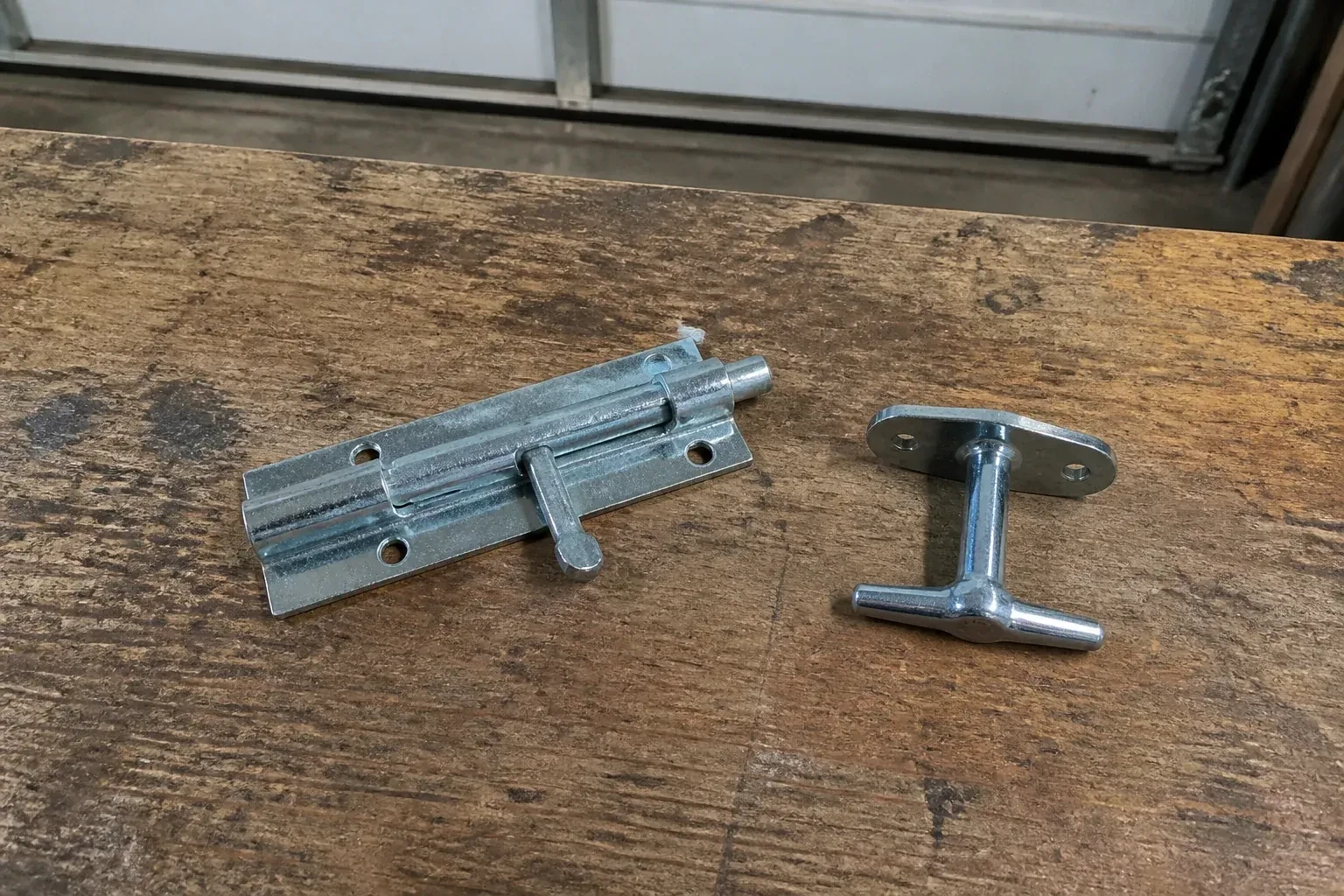
The T-shaped handle on the outside turns a full quarter, exactly as it has for twenty years, but nothing moves behind it. No clunk from the bars, no click at the tracks.
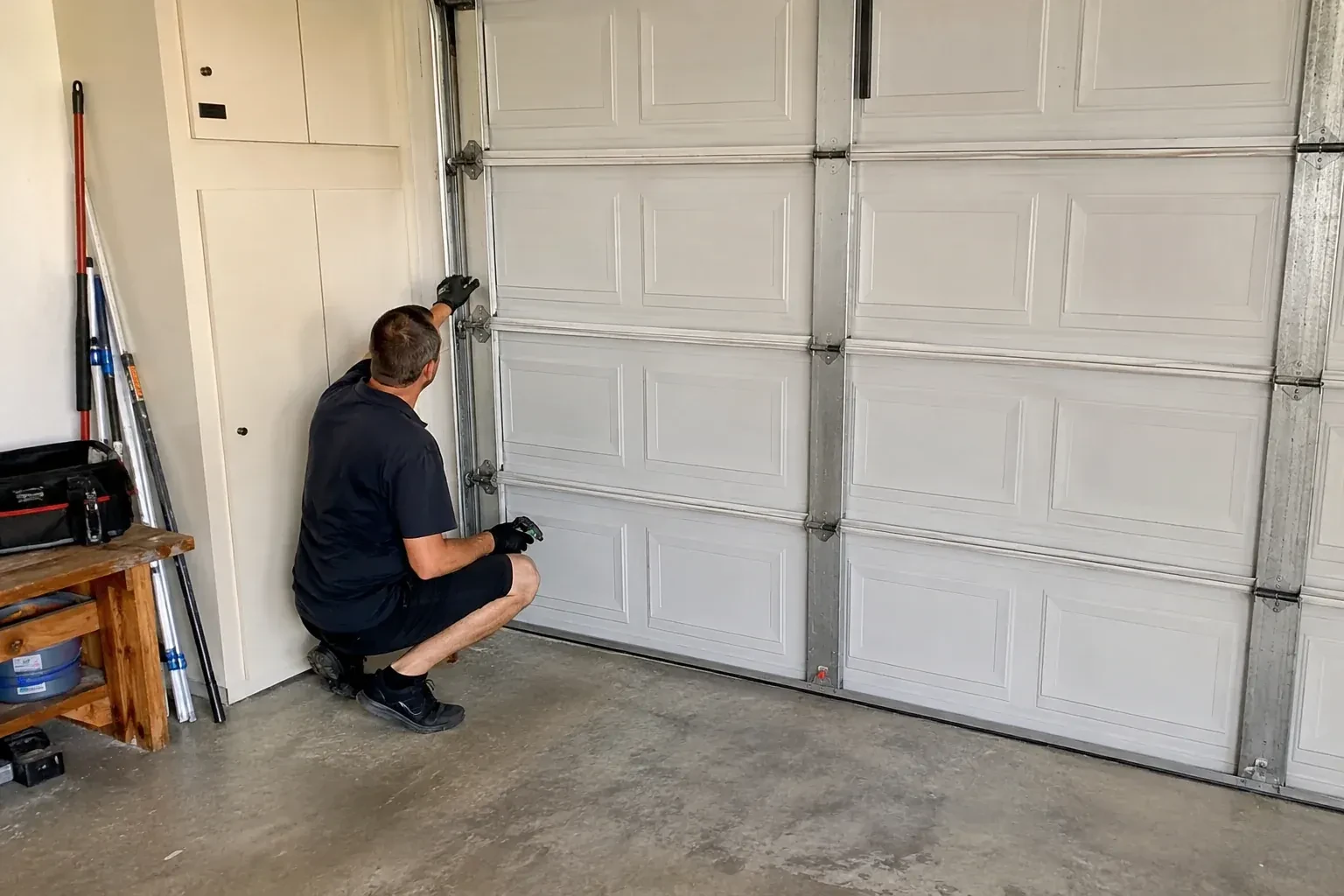
The visit runs in a settled order. On the phone you describe the lock, the door, whether an opener is fitted and whether the lock is currently jammed. On site the opener is disconnected, the door is closed by hand and checked for level. The lock is then examined piece by piece: handle, spindle, centre mechanism, bars, guides, cylinder, fasteners and the track slots. Adjustments are made first, worn parts replaced second, and the lock is cycled from both sides with the door shut. Finally the opener is reconnected, the door runs full cycles, and you are shown how the lock and the opener are meant to be used together.
Sound familiar?Coldsprings
The call
You pushed the slide bolt across like always, but tonight it stops short of the slot in the track and springs back. The door is down, the bottom seal is on the concrete, yet the bar and its hole are a finger's width apart.
The outside handle is turned while the inside of the door is watched. On a healthy lock the spindle rotates the centre body, a cam pushes both bars outward and a spring pulls them back. When the handle turns but nothing follows, the fault is somewhere in that short chain: a spindle that has twisted or sheared, a set screw that has let the inside knob spin free, a cam that has worn round, or a spring that has snapped. The inside cover comes off to see which, and the body is checked for cracks or for pulling away from the door. The exact broken piece decides whether a small part or a complete mechanism is fitted.
Scene 2
Freeing and renewing the bars and guides
Bars that have stiffened are worked loose with penetrating oil and then cleaned back to bare metal, while guides packed with rust are removed, cleaned or replaced with new ones fixed into sound material. A bar that has kinked is replaced rather than straightened, since spring steel that has been bent once takes a set and binds forever after; the new bar is cut to suit the door's width so it reaches through the track with a comfortable margin and retracts fully clear. Both bars are set to the same throw so the door locks evenly on both sides. A light film of silicone on the bars, not grease, finishes the job.
Scene 3
One rule at the wall button
Where an opener shares the door, opener makers direct that the manual lock be removed or positively disabled rather than left in service on habit alone. The technician demonstrates the opener's own lock-out feature at the wall control and shows everyone who uses the garage how to tell at a glance whether the bars are in or out. Spring-loaded snap latches are left with their holding catch explained, since they lock on their own when the door closes. Most families settle into the routine after a few days, and the label is there for visitors, house-sitters and the one morning when someone is half asleep.
In the van
Track lock-slot punch
Lock cylinder with tailpiece
Carriage bolts and backing plates
Lock bar guides
Spring-steel lock bars
What shapes the quoteOtonabee Garage Door Services
Corrosion and seized hardware
Screws rusted solid, a cylinder seized in its handle or bars welded into their guides take time to free or cut out, and corroded parts are replaced rather than reused.
Age and pattern of the lock
Older handles and mechanisms may need a matching-pattern replacement so the existing cutout and bars line up. Sourcing or adapting parts for an uncommon lock shows in the quote.
Rekeying the lock to match your other doors
Some households want the garage's manual lock to turn with the same key as the house, rather than carrying a separate one. Matching a cylinder to an existing key, or cutting a fresh set for both, is arranged once the existing hardware has been looked at.
Otonabee Garage Door Services(249) 494-2181 · open 24/7
How long does a manual lock repair usually take?
An adjustment to a slide bolt or a guide is a short job, while a full T-handle replacement with new bars, a rekey and a door alignment fills a longer visit. Most calls sit somewhere between, and the technician gives you a realistic sense of the time once the door has been looked at, rather than guessing from the phone.
Do you replace the whole handle or just the cylinder?
Whichever the fault calls for. A worn or broken cylinder in a handle that is otherwise sound is swapped or rekeyed on its own. A handle that is cracked, corroded through or of a pattern with no parts available is replaced as a set with its spindle and inside turn handle. The technician shows you what has failed before either route is taken.
What information helps when I book the visit?
Whether the lock is an inside sliding bar, an outside T-shaped handle with a key, or both; whether the handle turns and whether anything moves when it does; whether the key goes in and turns; whether an opener is fitted and whether it has ever run with the lock engaged; the door's material and age; and whether you hold a key. A photo of the inside of the lock is useful.
About 64% of homes in Peterborough were built in 1980 or earlier, according to the 2021 Census.In a mature neighbourhood the garage door is often the single largest feature of the front elevation, so keeping the original look matters. Modern insulated doors come in raised-panel and carriage styles that echo the older designs while running on today's torsion hardware.
Single-detached houses make up about 57% of homes in Peterborough (2021 Census).In a neighbourhood with both detached and attached homes, some customers decide alone and others report to a board or property manager. We adapt the visit accordingly, giving a homeowner options at the door and a manager a written summary they can circulate.