Skip to content
OtonabeeGarage Door ServicesOpen 24/7 (249) 494-2181
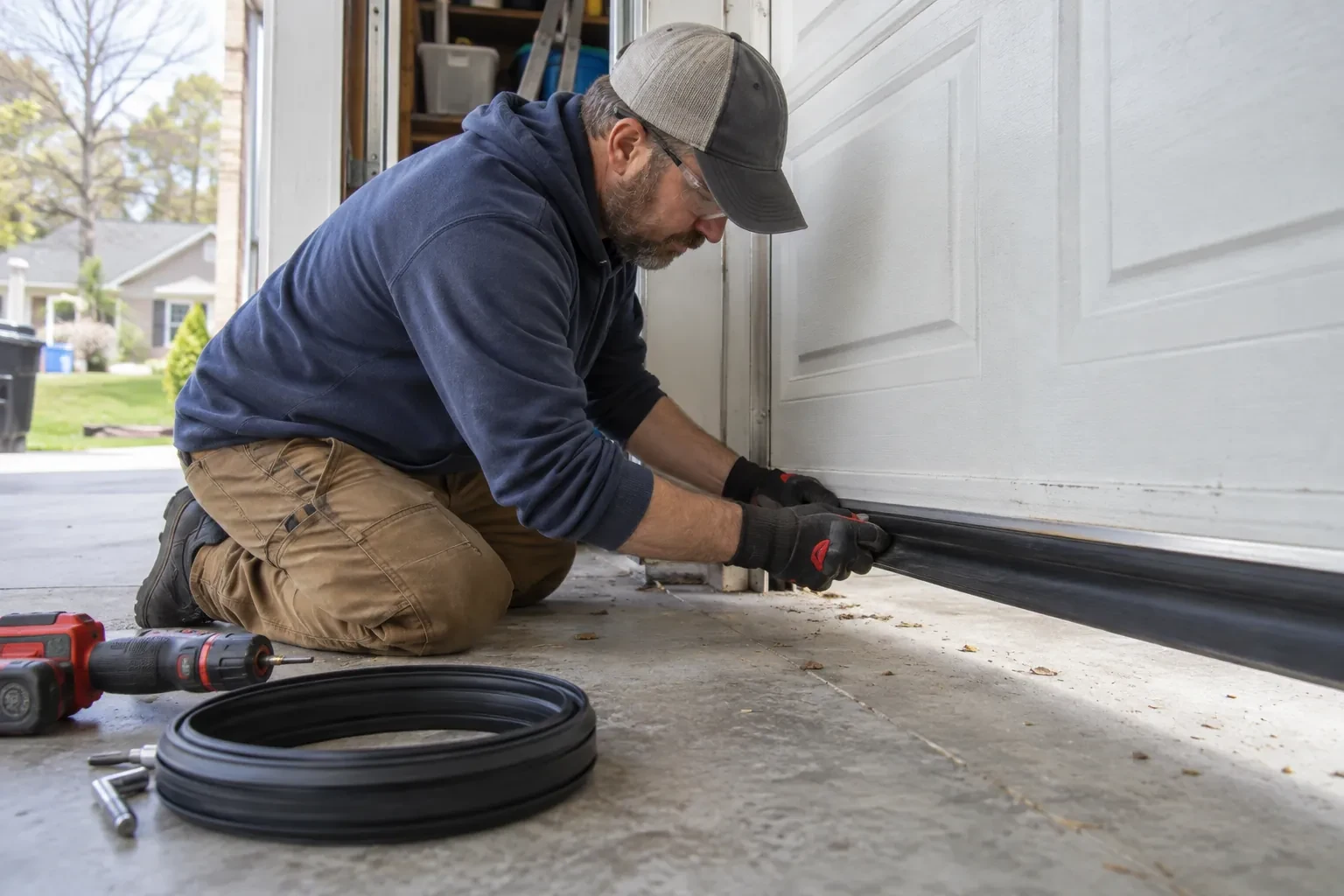
Kneeling technician pressing a black rubber seal along the base of a white garage door, with a coiled roll and drill beside. — Cavan Monaghan

Openers · Cavan Monaghan

Emergency Release Repair

It is the coldest morning of the year. A week of slush and road salt has crusted over the outside release lock, the key will not seat, and the opener inside is silent after the overnight outage.

In plain words

There are two releases on many garages, and this service covers both. Inside, the red handle drops from the trolley and anyone standing in the garage can pull it. Outside, some doors carry a small keyed cylinder, near the top on a sectional door or at mid-height on others; turning the key pulls a cable that throws the same lever from the driveway, which matters when the garage has no other door and the opener is quiet. Repair inside usually means a new cord, handle, lever or trolley. Repair outside means a new cylinder, cable or keys, routed clear of the section joints so the key turn reaches the lever.

Sound familiar?Cavan Monaghan

The call
It is the coldest morning of the year. A week of slush and road salt has crusted over the outside release lock, the key will not seat, and the opener inside is silent after the overnight outage. The car sits behind a door that will not move.
NextHow the visit goes

Emergency Release Repair · Cavan Monaghan

How the visit goes

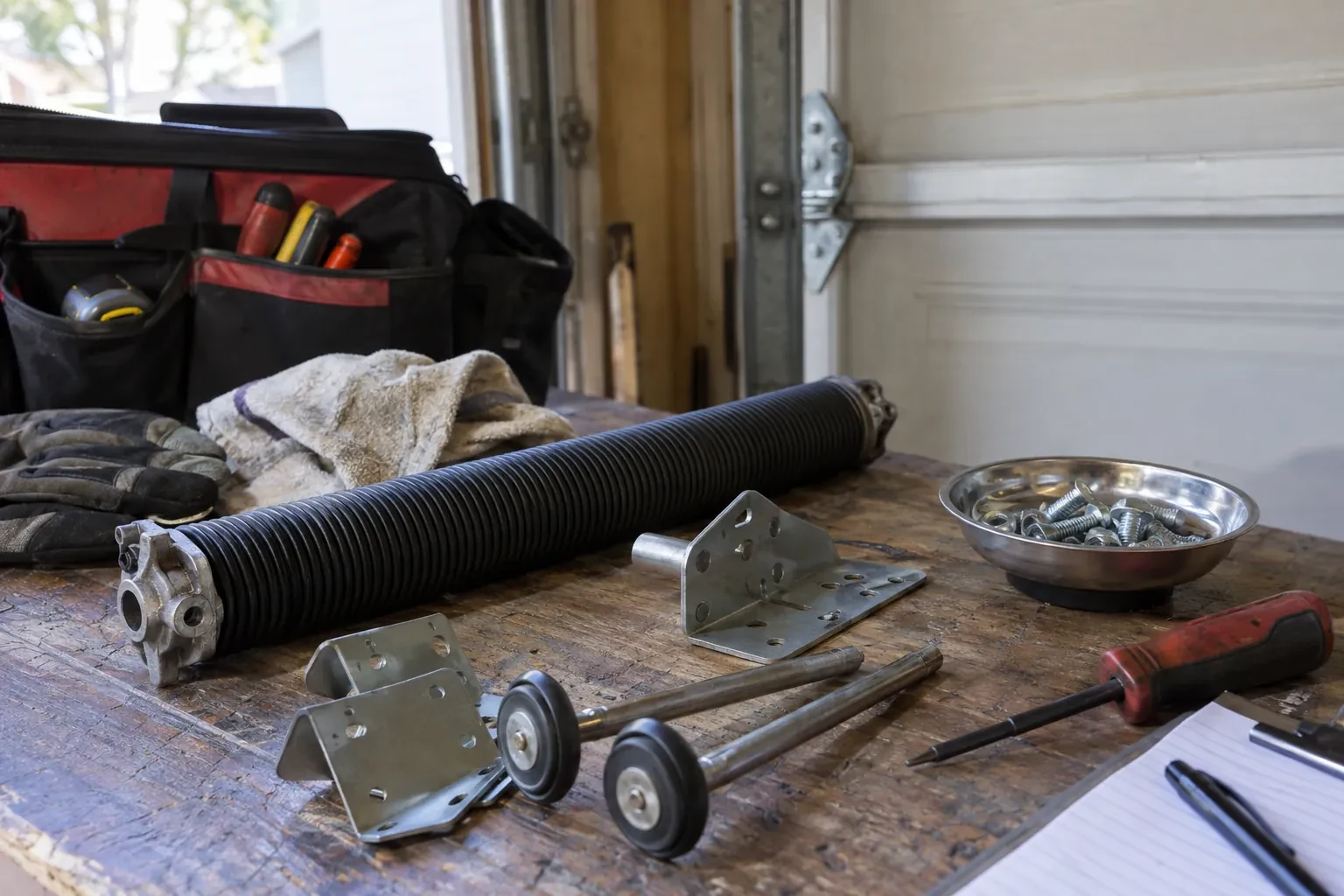
Black coiled torsion spring, two door rollers, metal brackets, a screw dish, gloves and a tool bag on a wooden workbench. — Cavan Monaghan
  1. Scene 1

    Why the trolley will not latch

    When the complaint is a trolley that runs but never reconnects, the technician looks for the usual reasons. The cord may have been pulled back toward the opener, which on many rails deliberately holds the lever out for repeated manual use, and simply never returned. The trolley may have been driven into the stop bolt or stop tab at the end of the rail after the travel limits drifted, so it sits jammed with the motor humming. The latch teeth may be worn, or the release arm bent so it can no longer drop into place. Each of these has a different fix, and telling them apart takes a minute with the cover off.

  2. Scene 2

    Door work first when the balance test fails

    When the disconnected door proves heavy, drifts or binds, the technician changes the order of the visit. The opener stays disconnected, and the door side is put right first: springs re-tensioned or replaced with winding bars by a technician trained for tensioned hardware, frayed cables replaced, dry rollers and hinges lubricated, a bent track straightened. Only when the door lifts and holds by hand is the release work finished and the trolley reconnected. This keeps the release honest: it is meant to hand you a door you can move, and it can only do that once the springs are carrying the weight.

  3. Scene 3

    Manual use for more than a day

    If an outage runs long, you know how to keep the door in manual mode without the trolley catching the door on its own. On rails where the cord is pulled down and then back toward the opener, the lever stays held out until you return it; on others the trolley simply stays free until the opener is run. Either way, the door is lifted and lowered by hand and a manual lock or slide bolt on the door keeps it shut overnight. When power returns, reconnect before pressing any button, so the opener never runs with the door lock engaged.

In the van

  • Outside key release kit (lock, cable, keys)
  • 2x4 offcut for the reversal test
  • Door arm, clevis pins and clips
  • Track clamps to hold the door
  • Hole saw for the top section

What shapes the quoteOtonabee Garage Door Services

Ceiling height and access
A standard garage puts the trolley in easy reach from a step ladder. High ceilings, a storage loft, a high-lift track or a car that cannot be moved add setup time.
Opener type and rail
A chain or belt unit on a one-piece rail, a sectional square rail, a screw drive and a wall-mounted opener each use a different release part, and the part sets the shape of the job.
Travel and tension reset
Where the trolley was freed or swapped, the chain or belt is re-tensioned and the travel limits are reset, then the reversal tests repeated. That setup time is part of the job and shown as such.

FeesSame any hour

Have it ready

Before you call · 0 / 3

(249) 494-2181

Frequently asked questions

Would battery backup mean I never need the release?

It covers most outages: the battery opens and closes the door on stored power, so the release stays on its hook. It is a wearing part that needs replacing every few years, and a status light or beep tells you when. The release is still the fallback for a flat battery or an opener that has itself failed, which is why the two are checked together. Many households on outage-prone streets keep both in working order.

What exactly is the emergency release on a garage door opener?

It is the manual disconnect between the opener and the door: a red handle on a cord below the rail, connected to a lever on the trolley. Pull it and the trolley lets go of the door so you can move the door by hand, for instance during a power outage. Push the lever back, or run the opener, and the two reconnect. It is required on residential openers, coloured red so it stands out from everything else overhead.

Why does the trolley run but never reconnect to the door?

Three usual causes. On many rails, pulling the cord back toward the opener deliberately holds the lever out for a spell of manual use, and someone forgot to return it. Or the trolley latch teeth or the release arm are worn or bent, so the two parts pass without catching. Or the carriage sits at the wrong point for the powered trolley to meet, since reconnecting is meant to happen during an opener cycle, not by pushing the door shut by hand. Each is a short fix once identified.

Cavan Monaghaninformation

PeterboroughOntario

Town
Cavan Monaghan, Peterborough
In business
23 years
Hours
Open 24/7
Nights, weekends and holidays, same fees
Visits
On-site assessment preferred. Request a visit or call.

2021 census: what it means at the door

Every square is one home in a hundred.

  • 49 in 100 homes · mixed ages
  • About 49% of homes in Cavan Monaghan were built in 1980 or earlier, according to the 2021 Census.Streets with a mix of older and newer homes tend to show a mix of door styles too, from flush wood panels to raised-panel steel and carriage designs. When a replacement is chosen, it can either match the house's period or the neighbouring doors, and we help weigh both.
  • Single-detached houses make up about 95% of homes in Cavan Monaghan (2021 Census).A detached house with its own garage is a natural fit for upgrades that need space: a jackshaft opener to free the ceiling, a high-lift door for a car hoist, or a wider door when a bigger vehicle arrives. The technician measures the opening and headroom and says what fits.

Source: Statistics Canada, Census Profile

Open Cavan Monaghan in Google Maps

On-site assessment

Request a visit.

It is the coldest morning of the year.

(249) 494-2181, open 24/7.