Skip to content
OtonabeeGarage Door ServicesOpen 24/7 (249) 494-2181
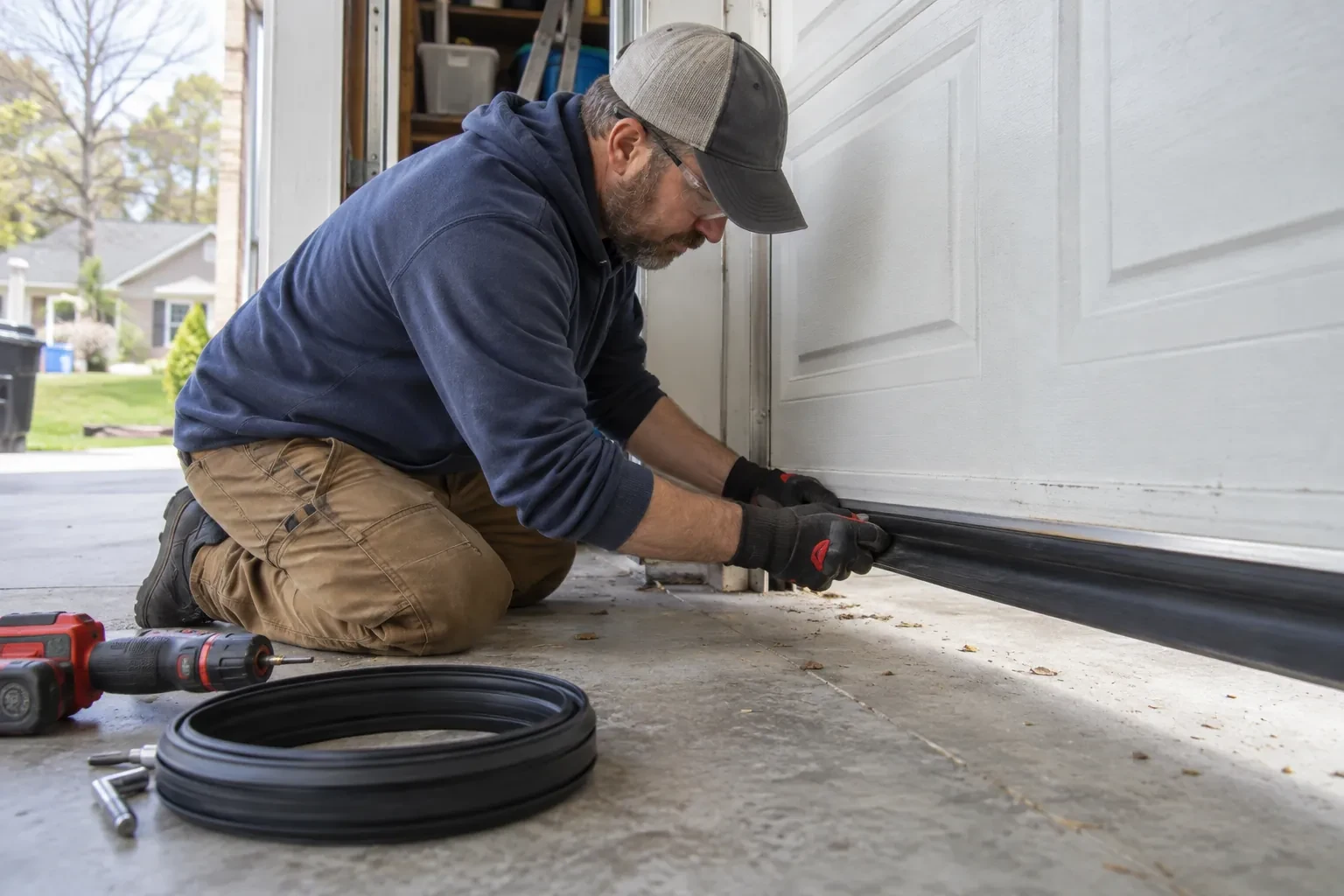
Kneeling technician pressing a black rubber seal along the base of a white garage door, with a coiled roll and drill beside. — Greenhill

Openers · Greenhill

Emergency Release Repair

It is the coldest morning of the year. A week of slush and road salt has crusted over the outside release lock, the key will not seat, and the opener inside is silent after the overnight outage.

In plain words

What gets repaired depends on which link failed. A cord that rotted or snapped is simplest: a new rope and red handle, cut so the handle hangs no higher than about 1.8 metres and clears the car roof. A lever that will not stay latched needs its spring or the lever itself replaced. A trolley with worn latch teeth, or one driven hard into the stop bolt, is freed, adjusted or swapped for the assembly made for that opener. On the outside key release, a seized cylinder, a stretched cable or a lost key each has its own fix. The technician names the part before work begins.

Sound familiar?Greenhill

The call
Since the new door went in, the red handle has hung just below the ceiling, a stepladder's height above anyone in the household. During last week's blackout your daughter stood under it with a broom, unable to hook it down.
NextHow the visit goes

Emergency Release Repair · Greenhill

How the visit goes

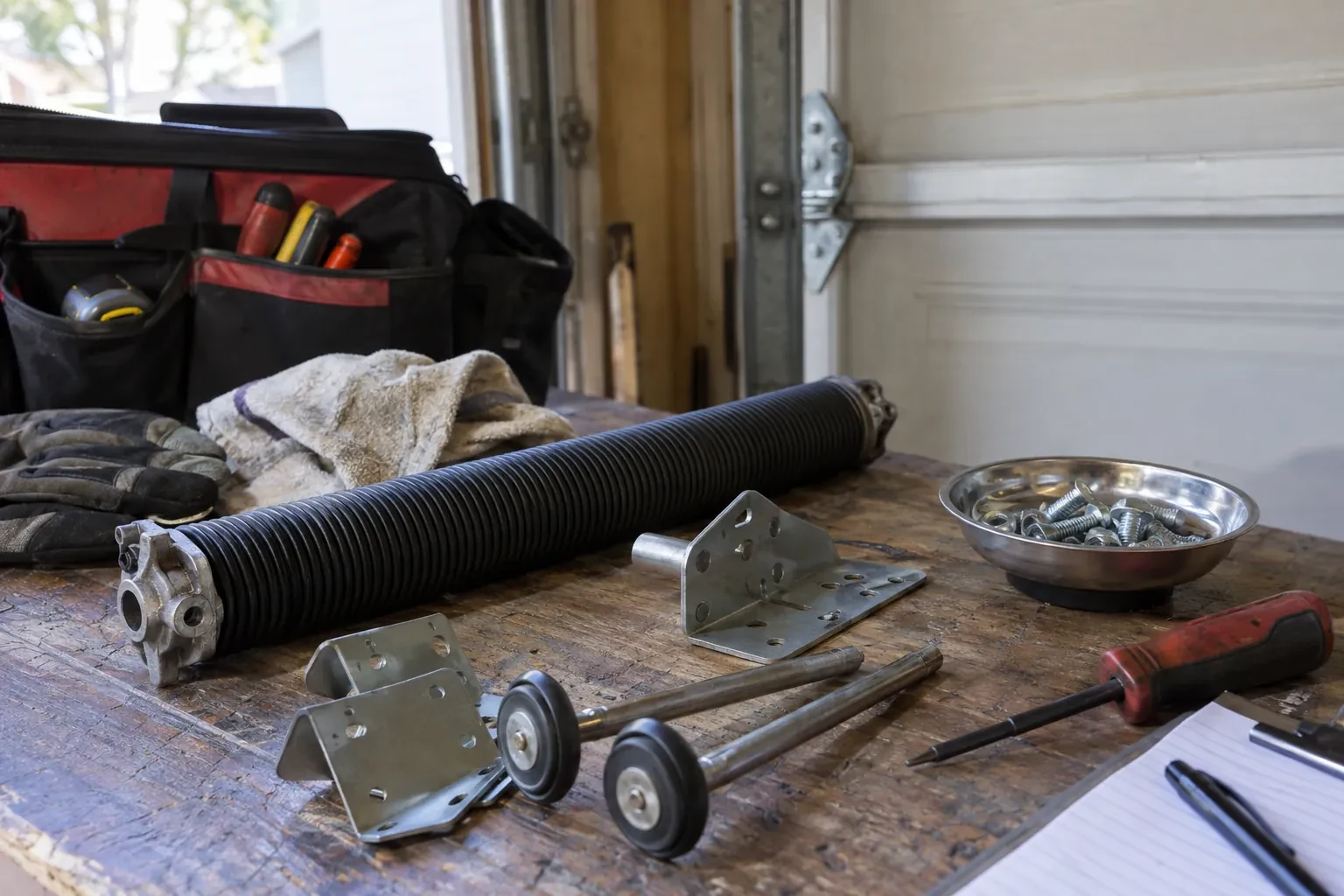
Black coiled torsion spring, two door rollers, metal brackets, a screw dish, gloves and a tool bag on a wooden workbench. — Greenhill
  1. Scene 1

    How the door behaves on its own

    The release is then pulled with the door closed and the door is lifted by hand, using the door's own handle or a gripping point clear of the section joints. This is the balance test, and it decides the order of the work. A door that rises with modest effort, holds at about a metre and stays fully open is ready for release work. A door that feels heavy, sinks back or springs upward is telling the technician that the counterbalance needs attention first, and the release is left disconnected until that is done. Manufacturers and the industry checklist both put this test ahead of any further use of the release.

  2. Scene 2

    Freeing a trolley from the stop bolt

    A trolley jammed against the stop at the end of the rail is freed rather than forced. The release is pulled so the door is out of the picture, the chain or belt tension nut is backed off a few turns to give the trolley room, and the motor is run so the trolley walks away from the stop. The travel limit that let it run too far is then adjusted, the chain or belt is re-tensioned to the sag the maker specifies for that rail, and the trolley is reconnected. Because the limits were touched, the door is cycled and the reversal tests are repeated before the job is called done.

  3. Scene 3

    Battery backup and outage-prone streets

    If your street loses power a few times each winter, the technician may raise battery backup. Modern openers can carry a battery that opens and closes the door on stored power, which spares you the release altogether in most outages. The battery is a wearing part, generally replaced every few years, and the head unit signals when it is tired. The release remains the fallback when the battery is flat or the opener itself has failed, which is why both are kept in working order. You leave knowing which of the two your household relies on and how each one is checked.

In the van

  • Outside key release kit (lock, cable, keys)
  • 2x4 offcut for the reversal test
  • Door arm, clevis pins and clips
  • Track clamps to hold the door
  • Hole saw for the top section

What shapes the quoteOtonabee Garage Door Services

Distance to your door
Every visit includes the drive. A property on the edge of the service area or down a long rural road takes more of the technician's day than one a few streets away, and the quote allows for it.
Age and parts availability
Trolleys, levers and rope kits for openers from the last two decades are stocked. An older model may need a part sourced, and the quote says whether that is a wait or a reason to consider replacement.
Opener type and rail
A chain or belt unit on a one-piece rail, a sectional square rail, a screw drive and a wall-mounted opener each use a different release part, and the part sets the shape of the job.

FeesSame any hour

Have it ready

Before you call · 0 / 3

(249) 494-2181

Frequently asked questions

Would battery backup mean I never need the release?

It covers most outages: the battery opens and closes the door on stored power, so the release stays on its hook. It is a wearing part that needs replacing every few years, and a status light or beep tells you when. The release is still the fallback for a flat battery or an opener that has itself failed, which is why the two are checked together. Many households on outage-prone streets keep both in working order.

What exactly is the emergency release on a garage door opener?

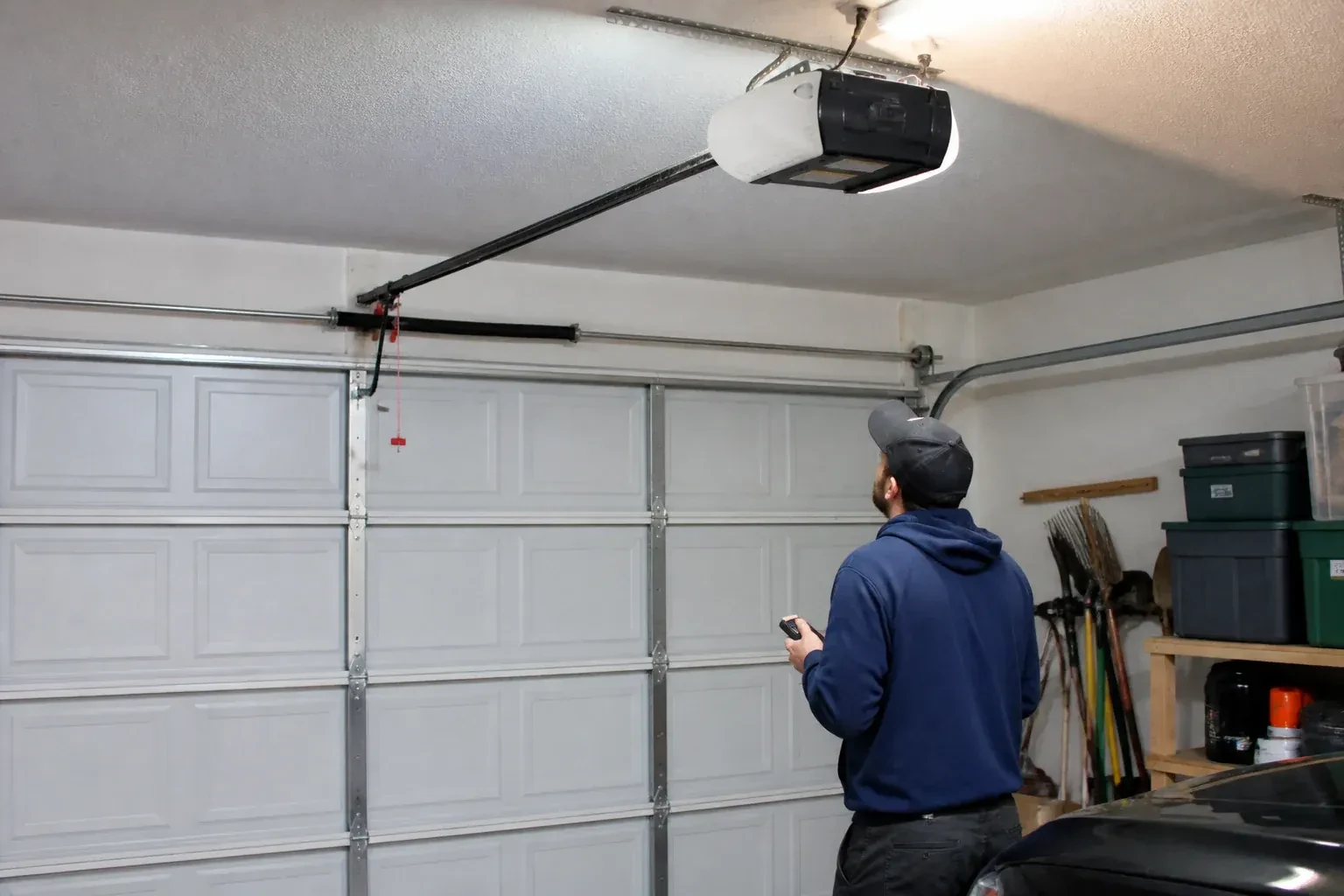
It is the manual disconnect between the opener and the door: a red handle on a cord below the rail, connected to a lever on the trolley. Pull it and the trolley lets go of the door so you can move the door by hand, for instance during a power outage. Push the lever back, or run the opener, and the two reconnect. It is required on residential openers, coloured red so it stands out from everything else overhead.

Why does the trolley run but never reconnect to the door?

Three usual causes. On many rails, pulling the cord back toward the opener deliberately holds the lever out for a spell of manual use, and someone forgot to return it. Or the trolley latch teeth or the release arm are worn or bent, so the two parts pass without catching. Or the carriage sits at the wrong point for the powered trolley to meet, since reconnecting is meant to happen during an opener cycle, not by pushing the door shut by hand. Each is a short fix once identified.

Greenhillinformation

PeterboroughOntario

Town
Greenhill, Peterborough
In business
23 years
Hours
Open 24/7
Nights, weekends and holidays, same fees
Visits
On-site assessment preferred. Request a visit or call.

2021 census: what it means at the door

Every square is one home in a hundred.

  • 64 in 100 homes · older homes
  • About 64% of homes in Peterborough were built in 1980 or earlier, according to the 2021 Census.Wiring in an older garage may be a single outlet on the ceiling shared with the light, so a new opener is chosen with that in mind, and a battery backup covers the door during a power cut. The technician looks at the outlet before recommending a unit.
  • Single-detached houses make up about 57% of homes in Peterborough (2021 Census).In areas mixing houses with townhouses and condos, a technician often works on several doors on one street, some owned outright and some looked after by management. Scheduling them together saves everyone time, and we are glad to plan a visit that covers the group.

Source: Statistics Canada, Census Profile

Open Greenhill in Google Maps

On-site assessment

Request a visit.

It is the coldest morning of the year.

(249) 494-2181, open 24/7.