Sound familiar?Byersville
- The call
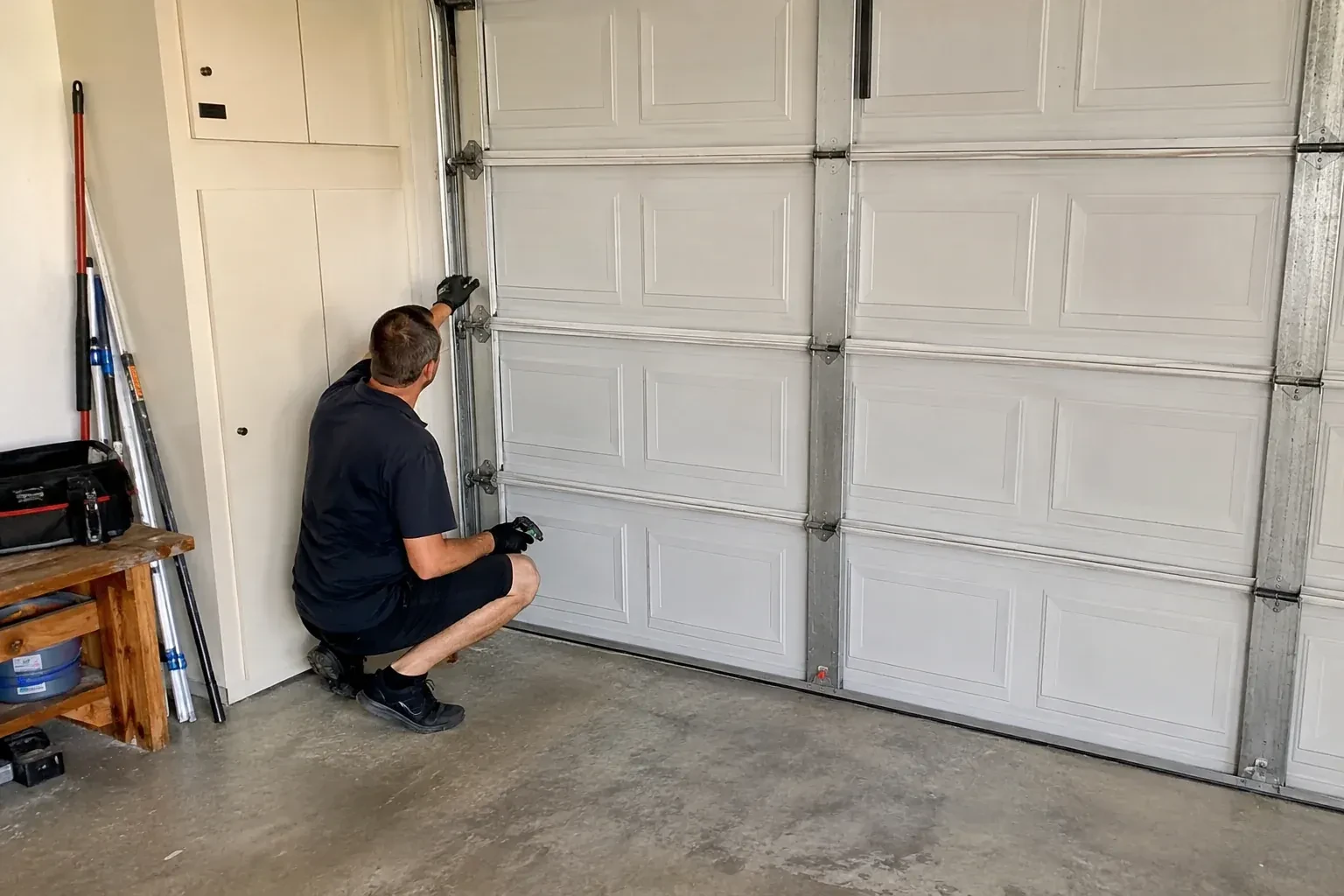
- The door lands with a thud you can feel through the kitchen floor, and sometimes it bounces back up a few centimetres before settling. The bottom section has a small dent where it keeps slamming the concrete.
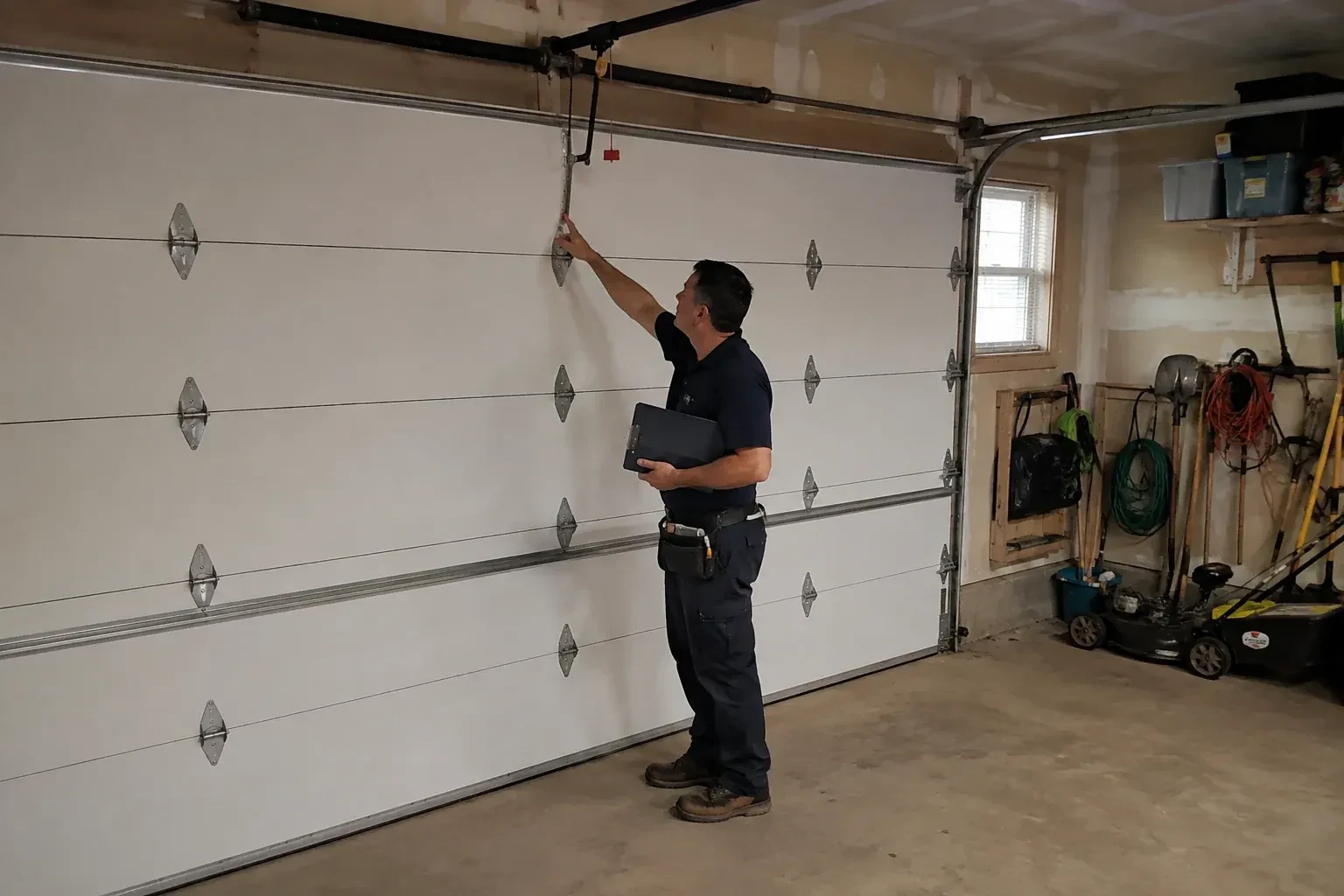
Twice this week the door started closing, stopped a metre from the floor and reopened on its own. One of the little sensor lights near the floor blinks instead of glowing steady, and the wall button has to be held to close it.
A tune-up is also a safety check of the opener. Openers made since the early 1990s carry two ways of protecting anything in the door's path: photo-eyes near the floor that reverse the door when the beam is broken, and a contact reversal that sends the door back up if it meets resistance. The technician cleans and aligns the sensors, then tests both: an object waved through the beam while the door closes, and a 2x4 laid flat under the centre of the door. A door that reverses cleanly on both is doing what its maker intended, and you learn how to repeat the test yourself each month.
Sound familiar?Byersville
Garage Door Tune-Up · Byersville
Scene 1
The opener is inspected as part of the door system, not as a separate appliance. The technician checks that the rail is firmly attached at the header and the ceiling hangers, that the chain or belt has the right sag, that the trolley and door arm are not worn or bent, and that the arm sits at the angle the manufacturer intends when the door is closed. Photo-eyes are located and their height measured, since the beam belongs no higher than about 15 centimetres off the floor. Indicator lights are read: steady means aligned, blinking means the pair are not seeing each other. The wall control and the red manual release are confirmed present and reachable.
Scene 2
The opener has two settings that drift over time: how far the door travels, and how much force it applies before deciding something is in the way. The technician runs the door and adjusts the down travel so the door seals firmly on the floor without bowing the top section or crushing the seal, and the up travel so it stops fully open without the trolley hitting the stop. Force is set as low as will reliably close the door, because a low force setting is what lets the door reverse gently on contact. On a sectional door the arm is kept from passing straight up and down at the closed position, which protects the top section and the rail.
Scene 3
You leave knowing how to run the same two tests the technician ran. With the door open, start it closing and wave a broom handle through the photo-eye beam: the door should stop and return fully open. Then lay a 2x4 flat on the floor under the centre of the door and close it: the door should reverse when it touches the board. Manufacturers ask for both tests monthly and after any adjustment. A door that stops on the board rather than reversing needs its down travel or force reset, which the record explains, and a door that fails again is a reason to call. The tests take two minutes and are the heart of a safe opener.
What shapes the quoteOtonabee Garage Door Services
FeesSame any hour
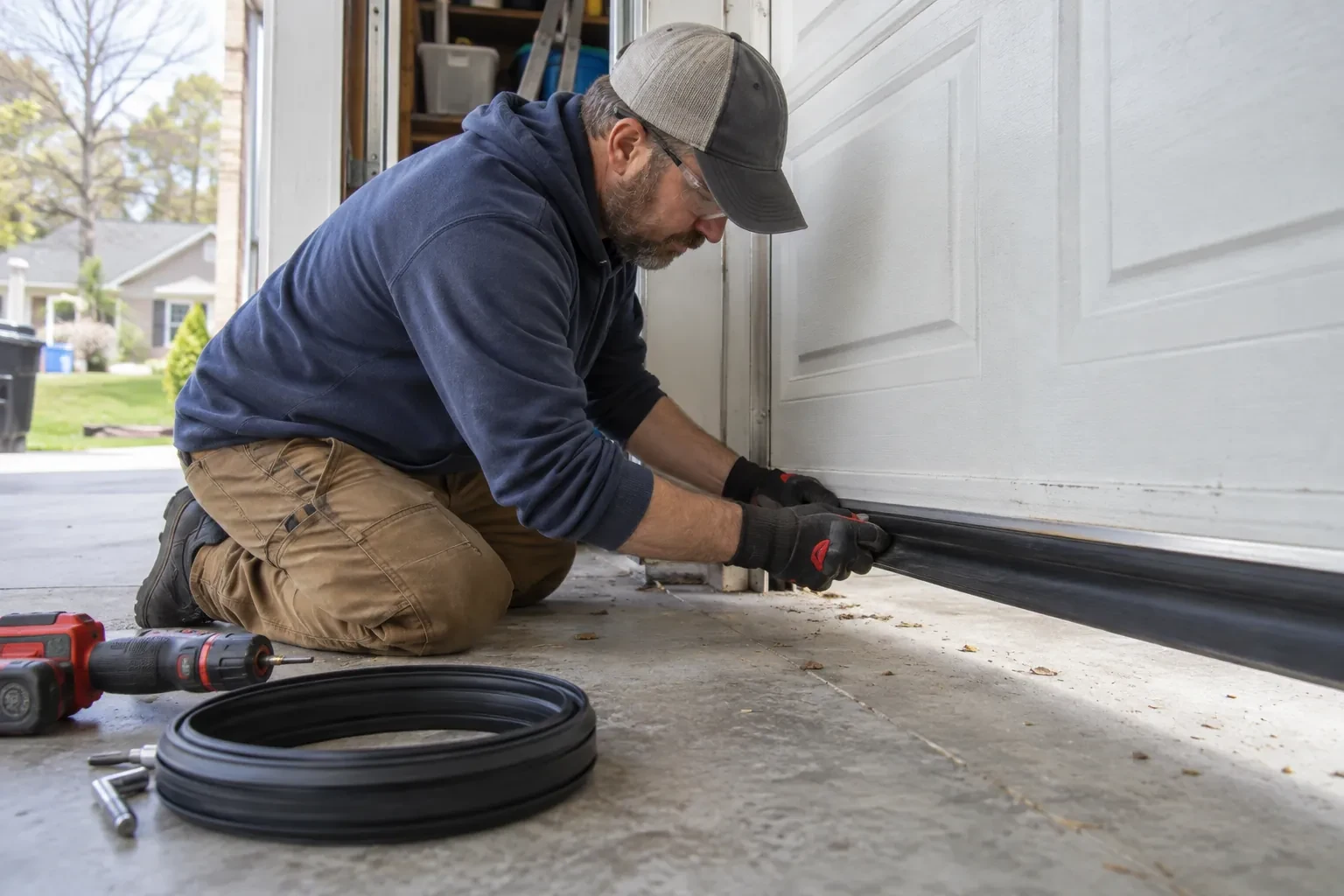
Small wear items found on the day, such as a roller or a hinge on a middle section, a bottom seal or a few fasteners, can often be replaced during the visit if you agree and the part is on the truck. Larger items, including springs, cables, drums, bottom brackets, a bent track or an opener gear, are written up as separate repairs with their own quote so you can decide with the facts in hand rather than under a raised ladder.
Cold affects several things at once. Old lubricant thickens into a drag on every hinge and bearing. Steel contracts slightly, so a track that was snug becomes tight. Rubber seals stiffen and the bottom seal can freeze to the slab. The opener then reads all this extra resistance as an obstruction and stops or reverses. A fall tune-up with a low-temperature lubricant, silicone on the seals and correctly set force goes a long way toward smooth winter mornings.
Once a year suits most attached garages here, ideally in the fall before cold weather thickens lubricant and stiffens seals. Door and opener makers suggest lubrication every three to six months and a homeowner balance check and reversal test every month, so an annual professional visit sits on top of that light routine. A lightly used door in a detached garage may go longer; a heavily used one, or one exposed to salt spray, benefits from a spring check too.
PeterboroughOntario
Garage Door Tune-Up · Peterborough, Cavan Monaghan, Otonabee-South Monaghan, Ashburnham, Claraday, Coldsprings, Collison Heights, Downers Corners, Greenhill, Jackson Heights, Kawartha Heights, Westmount
Every square is one home in a hundred.
On-site assessment
Twice this week the door started closing, stopped a metre from the floor and reopened on its own.
(249) 494-2181, open 24/7.
On-site assessment preferred · (249) 494-2181, open 24/7